Precision cold forging is really a game-changer in the world of manufacturing, especially for industries that need tough, high-quality parts. If you’ve seen the latest reports from MarketsandMarkets, they’re predicting the global cold forging market will hit around $21.8 billion by 2025. This surge is mainly because there's a growing push for lightweight yet super strong materials—think automotive, Aerospace, oil, and gas sectors. What’s pretty cool about cold forging is how it improves the mechanical properties of the parts and cuts down on waste—that’s a big plus for sustainable manufacturing today.
One of the best things about precision cold forging is that it can produce parts with really tight tolerances and complex shapes, which is often a headache with older methods. For example, the parts made this way tend to be stronger for their weight—perfect for high-performance stuff. Plus, a study from the International Journal of Advanced Manufacturing Technology pointed out that using these precise forging techniques can actually speed up production and cut costs, meaning things get to market faster. Overall, jumping into precision cold forging can seriously boost both efficiency and sustainability in manufacturing—no doubt about that.
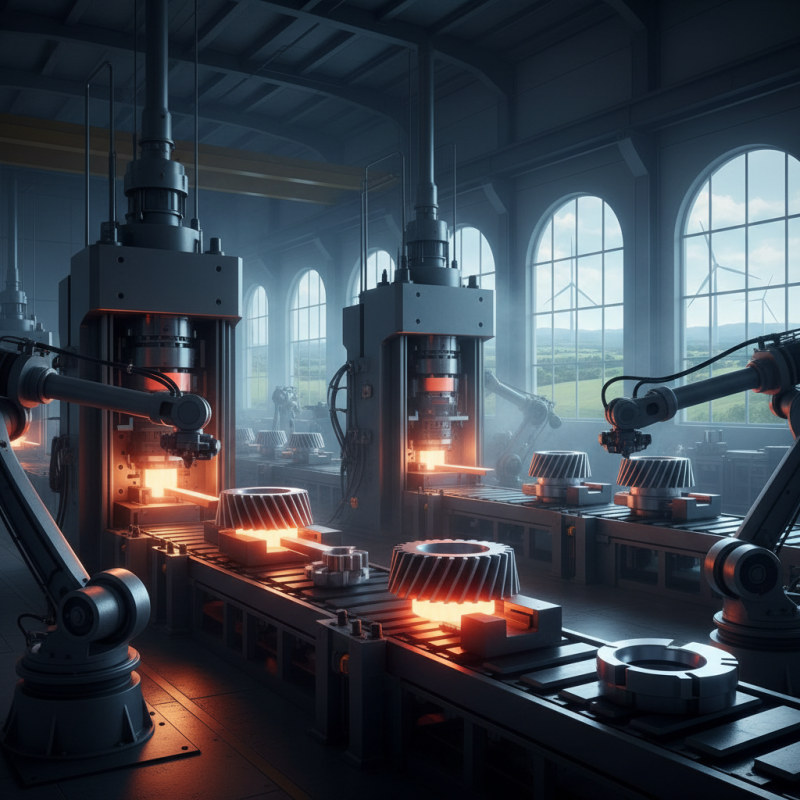
What is Precision Cold Forging?
Precision cold forging is a manufacturing process that involves shaping metal at room temperature through the application of high pressure. This technique allows for the creation of complex and intricate shapes with exceptional accuracy and surface quality. Unlike traditional forging methods that often require heating the metal to enhance its malleability, cold forging retains the material’s structural integrity, resulting in parts that are not only precise but also strong and durable.
The benefits of precision cold forging are numerous and significant for various engineering projects. First, the process can lead to reductions in material waste, as it often requires less machining and secondary processing. The high level of precision achieved can also enhance the performance of the final product, making it ideal for applications in industries such as automotive, aerospace, and electronics. Furthermore, the cold forging technique can improve mechanical properties due to work hardening, providing components with superior fatigue resistance and load-bearing capabilities. Overall, precision cold forging stands out as a highly efficient method for producing high-quality metal parts.
What is Precision Cold Forgings and How Can They Benefit Your Projects
| Dimension | Value | Benefits |
| Material Type | Steel, Aluminum, Brass | Versatility in applications |
| Typical Tolerance | ±0.005 inches | Enhanced precision |
| Temperature Range | Room Temperature | Energy-efficient process |
| Production Rate | 100-500 units/hour | High efficiency and output |
| Common Applications | Automotive, Aerospace, Electrical
| Wide industry usage |
| Cost Efficiency | Lower material waste | Reduction in overall costs |
Overview of the Cold Forging Process
The cold forging process is a metalworking technique where metal is shaped at or near room temperature. This method involves compressing the metal using dies, which allows for the creation of parts with high precision and intricate designs. During the process, the material flows into the die cavities, resulting in a final product that often requires little to no further machining. The key advantage of cold forging is the improvement in the mechanical properties of the metal, as the work hardening that occurs during the shaping process results in stronger components.
Additionally, cold forging is known for its efficiency and sustainability. The process generates less waste compared to traditional machining methods, as most of the material is utilized in the final product. This not only reduces material costs but also minimizes environmental impact. Furthermore, the high cycle speed and the ability to produce large volumes of parts in a single run make cold forging an attractive option for manufacturers looking to enhance productivity while maintaining quality. Overall, this innovative approach offers significant benefits for projects requiring strong, lightweight, and precisely crafted metal components.
Advantages of Precision Cold Forging in Manufacturing
Precision cold forging is a highly advantageous manufacturing process that offers a range of benefits, especially in high-volume production settings. One of the primary advantages is the ability to achieve tight tolerances and intricate geometries, which enhances the overall quality of the final product. This high level of precision reduces the need for extensive machining or finishing operations, leading to significant cost savings and a more efficient production workflow. Additionally, manufacturers can create complex parts in a single operation, minimizing material waste and increasing yield.
Another key benefit of precision cold forging is its strength enhancement capabilities. The process works by deforming metal at room temperature, which can refine the grain structure of the material, resulting in improved mechanical properties. Parts produced through cold forging typically exhibit higher strength and durability compared to those made by other methods. This is particularly beneficial in industries such as automotive and aerospace, where reliability is crucial. Furthermore, the reduction in energy consumption during the production process makes precision cold forging an environmentally friendly option, aligning with modern manufacturing practices that seek to minimize carbon footprints.
Applications of Precision Cold Forgings Across Industries
Precision cold forgings are increasingly gaining traction across multiple industries due to their ability to enhance material performance and reduce waste. In sectors such as automotive, aerospace, and electronics, precision cold forging is utilized to produce components that require high strength, tight tolerances, and intricate geometries. For instance, the automotive industry has seen a rise in the use of precision cold-forged components, which reportedly can increase the strength of parts by up to 30% compared to traditionally manufactured parts. According to a report by Grand View Research, the global cold forging market is projected to reach USD 12.5 billion by 2025, highlighting its importance in industrial applications.
In the aerospace industry, precision cold forgings are crucial for manufacturing lightweight and durable components, which directly contribute to fuel efficiency and performance. Components such as gear rings, shafts, and brackets made through this method are essential for aircraft safety and functionality. Furthermore, the electronics sector benefits from precision cold forgings through the production of connectors and housings, where high dimensional accuracy and surface quality are paramount. The use of cold forging results in minimized machining needs, leading to reduced production costs and quicker turnaround times. With advancements in technology, the application of precision cold forging is expected to expand, further solidifying its role in enhancing efficiency and sustainability across these industries.
Comparative Analysis of Cold Forging vs. Traditional Forging Techniques
Cold forging is increasingly favored in manufacturing due to its advantages over traditional forging techniques. Unlike conventional forging, which involves heating metals to high temperatures, cold forging processes the metal at room temperature. This results in stronger, denser parts, as the metal retains its original properties without undergoing thermal stress. A report by the American Society of Mechanical Engineers highlights that cold forging can improve material yield strength by up to 30%, making it an ideal choice for applications demanding durability and precision.
Moreover, the precision offered by cold forging allows for tighter tolerances and intricate designs that are often challenging to achieve with traditional methods. A comparative analysis reveals that cold forging can typically achieve tolerances of ±0.002 inches, significantly outperforming the ±0.005 inches achievable by traditional methods. This enhanced precision not only reduces the need for subsequent machining processes but also minimizes material waste, contributing to a more efficient production cycle. Industry reports estimate that manufacturers can reduce production costs by as much as 15% through the adoption of precision cold forging techniques, highlighting its economic benefits along with the performance advantages.
Industry Data: Cost Savings and Efficiency Improvements in Projects
Precision cold forging is a manufacturing process that offers significant cost savings and efficiency improvements for various projects. According to a report by the Manufacturing Institute, utilizing precision cold forging can reduce production costs by approximately 30% compared to traditional machining methods. This is largely due to the process's ability to produce parts with close tolerances and minimal material waste. Such efficiencies not only minimize direct costs but also contribute to faster production times, enabling manufacturers to meet tight deadlines while maintaining high-quality standards.
Moreover, industry studies indicate that projects leveraging precision cold forging experience up to a 20% improvement in operational efficiency. The reduction in machining operations translates into shorter lead times, which is crucial in today's fast-paced manufacturing environment. Additionally, the enhanced strength and performance characteristics of cold-forged components can lead to lower warranty claims and reduced lifecycle costs. As the demand for high-performance, cost-effective solutions continues to grow, precision cold forging stands out as a valuable technique for companies aiming to optimize their manufacturing processes and overall project outcomes.
Future Trends in Precision Cold Forging Technology and Innovation
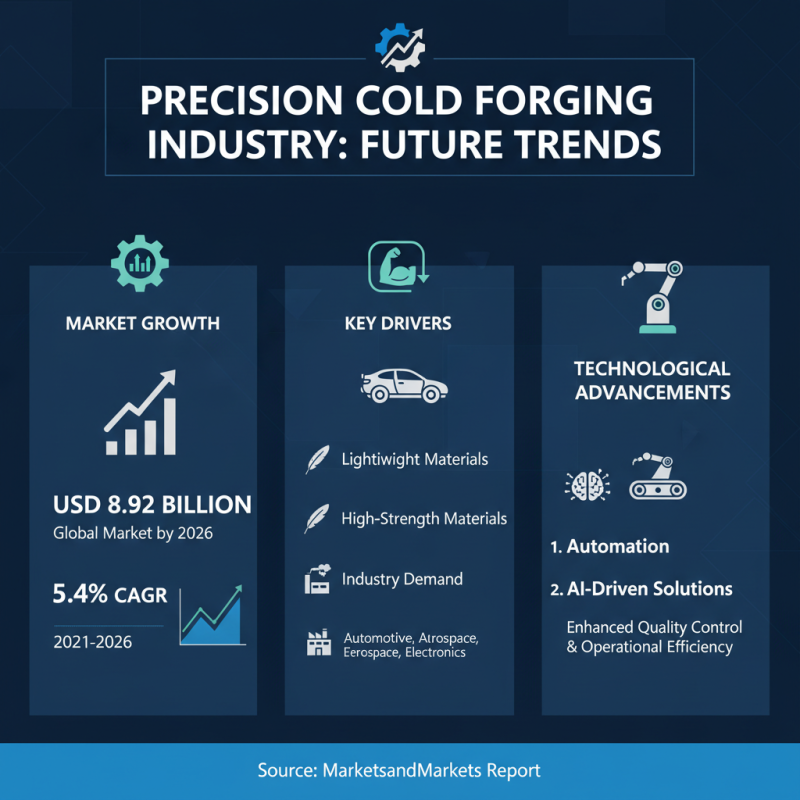
The precision cold forging industry is witnessing significant advancements driven by innovative technologies and evolving market demands. According to a report by MarketsandMarkets, the global cold forging market is projected to reach USD 8.92 billion by 2026, growing at a CAGR of 5.4% from 2021. This growth can be attributed to the increasing need for lightweight and high-strength materials in industries such as automotive, aerospace, and electronics. As manufacturing processes become more refined, the precision cold forging techniques are expected to adopt automation and AI-driven solutions to enhance quality control and operational efficiency.
In terms of future trends, the integration of Industry 4.0 technologies, including IoT and machine learning, is set to revolutionize precision cold forging. These technologies will facilitate real-time monitoring of the forging process, enabling manufacturers to make instant adjustments and significantly reduce waste. Additionally, the development of advanced materials like high-strength alloys and composites promises to further elevate the capabilities of cold forging, allowing for the production of more complex geometries and improved performance characteristics. As these trends continue to evolve, precision cold forging will play a crucial role in meeting the demands of modern engineering projects, providing enhanced reliability, efficiency, and sustainability.
Comparative Analysis of Cold-Forged vs. Cold-Extruded Input Shafts: Which is Right for Your Application?
When choosing between cold-forged and cold-extruded input shafts for your mechanical application, it's essential to consider the unique properties and performance benefits of each manufacturing process. Both techniques are designed to enhance the strength and durability of the input shafts, making them ideal for demanding applications such as vehicle drivelines, industrial transmissions, and hydraulic systems. The choice ultimately depends on the specific requirements of your system, including the levels of stress, abrasion, and deformation involved.
Cold forging is particularly advantageous in scenarios where high tensile strength and a finer grain structure are needed. This process involves molding metal at room temperature, which resultados in a dense and tightly packed structure that can withstand significant mechanical forces. On the other hand, cold extrusion is known for producing complex shapes and a high degree of dimensional accuracy. It is an excellent choice for applications that demand intricate designs while maintaining robustness against wear and tear.
Evaluating the operational conditions and performance expectations of your system will guide your decision in selecting between these two manufacturing methods. Both cold-forged and cold-extruded input shafts offer superior resistance to extreme stress and wear, making them highly reliable options for critical components in various industrial applications. Understanding these differences can ultimately lead to improved efficiency and longevity in your mechanical systems.
FAQS
: Precision cold forging is a manufacturing process that shapes metal at room temperature using high pressure, allowing for the creation of complex shapes with high accuracy and surface quality.
The main benefits include reduced material waste, improved mechanical properties, enhanced performance, and stronger, more durable parts, making it suitable for various industries.
Unlike traditional forging that requires heating metal, precision cold forging processes the metal at room temperature, resulting in stronger and denser parts without thermal stress.
Cold forging can enhance material yield strength by up to 30%, resulting in parts with superior durability and performance ideal for demanding applications.
This method allows for tight tolerances and intricate designs in a single operation, reducing the need for extensive machining, minimizing material waste, and leading to significant cost savings.
Precision cold forging can achieve tolerances of ±0.002 inches, significantly better than the ±0.005 inches typical of traditional forging methods.
Yes, precision cold forging reduces energy consumption during production, making it an environmentally friendly choice aligned with modern sustainable manufacturing practices.
Precision cold forging is commonly used in industries such as automotive, aerospace, and electronics, where high performance and reliability are crucial.
Conclusion
Precision cold forgings represent an advanced manufacturing technique that enhances the accuracy and strength of metal parts while maintaining exceptional surface finishes. The cold forging process involves shaping metal at ambient temperatures, which not only preserves the material’s integrity but also reduces waste and energy consumption compared to traditional forging techniques. This method effectively improves production efficiency and reduces costs, making it an attractive option for various industries.
The advantages of precision cold forgings extend to a wide array of applications, from automotive components to aerospace parts. As industries increasingly adopt this technology, future trends indicate a growing emphasis on innovation, including the integration of smart manufacturing practices. Overall, precision cold forgings are poised to play a vital role in the evolution of manufacturing, offering significant benefits in terms of precision, efficiency, and environmental sustainability.